


Serious raid progression demands more than instinct and anecdotal feedback. Raid Progression Data Logging is the structured Analytical Tool that transforms wipes into measurable learning opportunities. By recording every pull and analyzing combat logs, teams move beyond emotion-driven assumptions and into Objective Performance Review.
Groups that rely on memory and perception fall into Subjective Failure Reports—misidentifying causes and repeating mistakes. Teams that log and analyze data systematically identify root causes, implement precise corrections, and accelerate progression.
Why Subjective Reporting Fails
Immediately after a wipe, perceptions are often distorted. Common examples include:
- “Healing felt weak.”
- “Damage was too low.”
- “Tank damage seemed unmanageable.”

Combat logs frequently reveal different truths: missed interrupts, poor mitigation uptime, improper cooldown sequencing, or avoidable damage intake. Without data, teams adjust strategy incorrectly—adding healers instead of fixing mechanics, or blaming DPS instead of addressing utility gaps.
The Structure of Objective Performance Review
Data logging enables structured review sessions focused on metrics instead of memory. The process includes:
- Identify First Failure Point: Determine the first avoidable death or mechanical breakdown.
- Trace Damage Sources: Review death graphs and damage breakdowns.
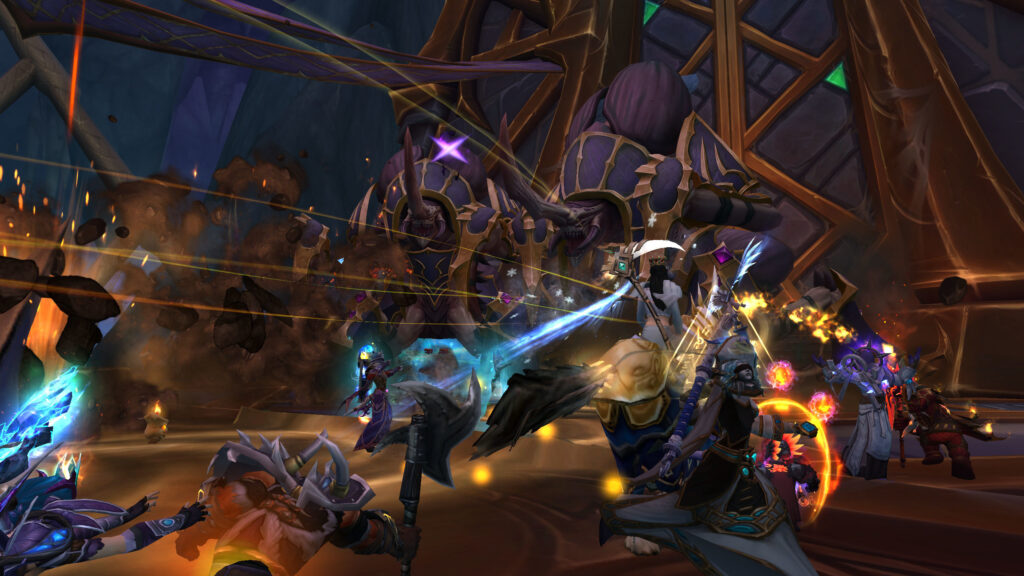
- Compare Against Ideal Model: Analyze uptime, cooldown alignment, and mechanic timing.
- Apply Specific Adjustment: Implement measurable corrections before the next pull.
Key Metrics That Define Progress
| Metric Category | What It Measures | Progression Insight |
|---|---|---|
| Death Reports | Sequence of lethal events | Pinpoints exact failure trigger |
| Mitigation Uptime | Active mitigation % and defensive coverage | Reveals tank or healer inefficiency |
| Interrupt Accuracy | Timing vs. cast completion | Identifies rotational gaps |
| DPS Uptime | GCD utilization and burst alignment | Highlights execution inconsistency |
| Cooldown Alignment | Synchronization with vulnerability windows | Detects wasted burst potential |
Turning Data into Actionable Adjustments
Logs are only valuable if translated into adjustments. Examples include:
- Increasing tank mitigation uptime from 70% to 90% before next pull.
- Reassigning interrupt rotations to prevent overlaps.
- Delaying boss push at specific HP percentages for cooldown readiness.
- Re-sequencing healer cooldowns to avoid overlap.
Each correction should be specific, measurable, and tested immediately.
Establishing a Data-Driven Culture
For logging to be effective, the team must separate critique from blame. Data highlights execution errors—not personal shortcomings. Leaders should frame reviews objectively:
- Focus on metrics, not personalities.
- Encourage accountability without public shaming.
- Celebrate measurable improvement between pulls.
This creates psychological safety while maintaining performance standards.
Long-Term Benefits of Consistent Logging
Over time, structured data review produces:
- Reduced repeated mechanical errors
- Improved cooldown optimization
- Higher DPS and healing consistency
- Shorter progression timelines
Teams that log every pull accumulate institutional knowledge that compounds across tiers and expansions.
Conclusion
Raid Progression Data Logging is the cornerstone Analytical Tool for modern progression teams. By replacing Subjective Failure Reports with Objective Performance Review, groups implement precise, evidence-based strategy adjustments.
This data-driven methodology accelerates learning, improves execution reliability, and transforms wipes into structured progress toward boss kills.